
This paper explores the selection and design concepts for propellers of different types of ships, with a focus on analyzing the propeller design characteristics of common vessel types such as passenger ships, bulk carriers, fishing vessels, container ships, engineering ships, and car ferries. For each ship type, detailed elaboration is provided from aspects including operating conditions, ship requirements, and key propeller design considerations. Research indicates that ships with different purposes have significant differences in their propeller design requirements, and targeted designs based on specific operating conditions are necessary. The research findings of this paper can serve as a reference for the selection and design of marine propellers.
Keywords:Marine propellers; selection and design; passenger ships; bulk carriers; fishing vessels; container ships; engineering ships; car ferries
Introduction
As the core component of a ship’s propulsion system, the marine propeller directly impacts the vessel’s navigation efficiency and economic performance. Due to differences in operating conditions, load characteristics, and navigation requirements among various ship types, distinct demands are imposed on propeller design. Rational propeller selection and design can significantly enhance propulsion efficiency, reduce fuel consumption, minimize vibration and noise, and extend service life. Focusing on common ship types such as passenger ships, bulk carriers, fishing vessels, container ships, engineering ships, and car ferries, this paper systematically analyzes the operating characteristics and propeller design concepts for each type, aiming to provide theoretical reference and practical guidance for ship design and propeller selection.
1.Selection and Design Concept of the Passenger Ship Propeller
Passenger ships have high requirements for navigation comfort and safety, as they typically need to maintain high speed and perform frequent start-stop operations. When designing the propellers of passenger ships, the following aspects should be given priority consideration:Firstly, a high-efficiency propeller type—such as a highly skewed propeller—should be selected to reduce vibration and noise; Secondly, the determination of the propeller’s diameter and pitch ratio must take into account the ship’s speed performance and maneuverability requirements; Thirdly, high-strength bronze or stainless steel is mostly adopted as the material to enhance corrosion resistance and extend service life.
Special attention must also be paid to the cavitation performance in the design of passenger ship propellers. Due to the high speed of passenger ships, cavitation is prone to occur at the propeller blade tips, leading to reduced efficiency and increased noise. Cavitation can be effectively suppressed by optimizing the blade section shape, increasing the number of blades (usually 4-5), and adopting an appropriate skew distribution. In addition, the reverse propulsion performance of passenger ship propellers must be considered to meet the operational needs of frequent docking and undocking.

3.Selection and Design Concept of Fishing Vessel Propellers
Fishing vessels operate under complex and variable working conditions: they need to chase schools of fish at high speed while also performing trawling operations at low speed, thus requiring propellers to have strong adaptability.The design characteristics of fishing vessel propellers include: adopting 3-4-bladed controllable pitch propellers (CPP) to adapt to different operating conditions; optimizing the blade profile to balance propulsion efficiency and towing force requirements; and selecting materials that can withstand seawater corrosion and the impact of fishing nets.
Special attention should be paid to low-speed, high-thrust operating conditions in fishing vessel propeller design. During trawling, the propellers must deliver large thrust at low speeds—placing special requirements on blade section design and pitch distribution. Meanwhile, as fishing vessels often operate in shallow waters, their propeller design must account for the shallow water effect. In addition, fishing net entanglement is a unique challenge for these propellers; the risk can be reduced by optimizing blade tip shape and clearance during design.

5.Selection and Design Concept of Propellers for Engineering Vessels
There is a wide variety of engineering vessels, including dredgers, crane ships, pipe-laying vessels, etc. Their common feature is the high requirement for positioning capability and special operational functions. The design characteristics of engineering vessel propellers include: extensive adoption of azimuth thrusters or ducted propellers; emphasis on low-speed maneuverability and positioning capability; and design considerations for the impact of special operating environments such as shallow water and turbid water quality.
Special attention should be paid to maneuverability and reliability in the propeller design of engineering vessels. Azimuth thrusters can provide thrust in 360-degree directions, greatly enhancing the ship’s mobility. Ducted propellers can increase thrust and protect the propeller from external damage. For engineering vessels that often operate in harsh environments, the propeller material must possess excellent wear resistance and impact resistance. In addition, some special engineering vessels may also adopt electric propulsion or hybrid power systems, which put forward new requirements for propeller design.


2.Propeller Selection and Design Concept for Bulk Carriers
Bulk carriers usually sail at an economic speed with significant load variations, requiring propellers to have high durability and economic efficiency. The design of bulk carrier propellers mainly takes the following factors into account: generally adopting 3-4 bladed MAU-type or B-type propellers with a large diameter to improve propulsion efficiency; selecting a moderate pitch ratio to balance heavy-load and light-load operating conditions; and using materials such as nickel-aluminum bronze or manganese bronze, which offer excellent corrosion resistance and cavitation resistance.
The design of bulk carrier propellers requires special attention to load adaptability. Due to the significant draft difference between fully loaded and unloaded conditions of bulk carriers, the propeller immersion depth varies remarkably. Therefore, the design should ensure good propulsion efficiency under all load conditions. In addition, bulk carriers sail at a relatively low speed, and the propeller speed is also low. Generally, it is necessary to increase the diameter to improve efficiency, but the constraints of the stern shape and rudder clearance must be taken into account.

4.Selection and Design Concept of Propellers for Container Ships
Container ships are characterized by high speed and regular liner services, demanding extremely high efficiency and reliability from their propellers. Key design points for container ship propellers include: adopting 4-5-bladed propellers with a large diameter and high pitch ratio; optimizing blade profiles for maximum efficiency, often using advanced airfoil sections; and selecting high-strength stainless steel or special bronze alloys as materials.
A key challenge in container ship propeller design is addressing cavitation caused by high speeds. Cavitation generation and propagation can be effectively controlled through technical measures such as increasing the number of blades, optimizing the skew angle, and adopting scimitar blades. Meanwhile, as container ships are typically equipped with high-power main engines, the propeller design must ensure the full utilization of engine power and proper speed matching. In addition, to adapt to different loading conditions, the design should undergo multi-condition optimization.
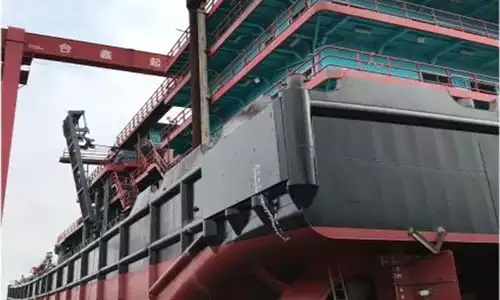
6.Propeller Selection and Design Ideas for Car Ferry Vessels
Car ferry vessels are characterized by frequent berthing and unberthing, short voyage distances, and significant load variations, imposing high requirements on the maneuverability and adaptability of their propellers. The key design points for car ferry propellers include: adopting a two-blade or four-blade configuration to enhance maneuverability; selecting controllable pitch propellers to adapt to different loads; and incorporating reliability requirements for frequent start-stop operations and forward-reverse switching into the design.
Special attention should be paid to the maneuvering response characteristics in the propeller design of car ferry vessels. By optimizing the blade profile and pitch distribution, the acceleration performance and astern thrust of the propeller are improved. A two-blade configuration can provide differential thrust to achieve rapid steering of the vessel. Meanwhile, car ferry vessels have a shallow draft, so the propeller design must take into account the shallow water effect and cavitation issues. In terms of material selection, the fatigue problem caused by frequent operations should be considered.
Conclusion
Different types of ships require differentiated propeller design schemes due to their specific operating conditions and performance requirements. Passenger ships prioritize comfort and high-speed performance, bulk carriers emphasize economy and durability, fishing vessels need to adapt to variable operating conditions, container ships pursue high efficiency and reliability, engineering ships focus on maneuverability and special functions, while car ferry vessels pay attention to maneuvering response and adaptability. With the advancement of ship technology and the improvement of environmental protection requirements, future propeller design will place greater emphasis on comprehensive performance optimization, energy conservation and environmental protection, and intelligent control. Ship designers should select the optimal propeller design schemes based on the actual needs of specific ship types and comprehensively consider various factors.


