
This paper systematically introduces the quality control systems for different certification levels in ship propeller manufacturing, focusing on analyzing the differences among mainstream standards such as BV (Bureau Veritas), CCS (China Classification Society), and DNV (Det Norske Veritas). Research shows that the higher a propeller’s certification level, the stricter its quality control procedures—with total inspection items increasing by 30-40% throughout the process from raw material testing to final delivery. This directly drives up production costs by 15-25%. The paper elaborates on the manufacturing processes, inspection items, and cost structures of propellers at each certification level, providing professional references for shipowners and shipyards to select appropriate standards.
Key words: Propeller certification; BV standard; CCS standard; Quality control; Manufacturing cost
1.Introduction
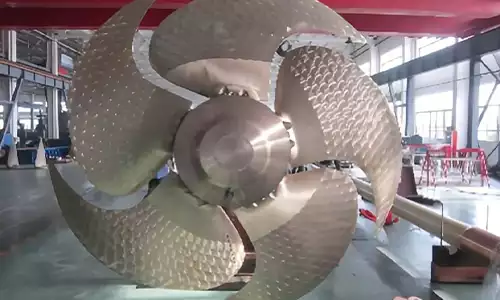
As a critical propulsion component, a ship propeller’s quality directly impacts a vessel’s safety and economic efficiency. According to statistics from the International Maritime Organization (IMO), approximately 15% of marine mechanical failures are associated with propeller quality issues. Currently, propeller products on the market are classified by certification level into uncertified products, CCS-class, BV-class, DNV-GL-class, and others.Different certification levels represent distinct quality control standards and inspection processes, with price differences reaching 30-50%. Understanding these discrepancies is crucial for ship design and procurement decisions.
2.Overview of Main Certification Standards
2.1 Major International Certification Bodies
- BV (Bureau Veritas):
- One of the world’s oldest classification societies
- Boasts the most stringent certification standards
- Holds approximately 20% of the global market share
- CCS (China Classification Society):
- Formulator of China’s national standards
- Features relatively basic certification requirements
- Holds a dominant position in the Asian market
- DNV-GL (DNV GL Group):
- Leads in cutting-edge technical standards
- Places special emphasis on material performance
- Ranks first in the market share across Europe
2.2 Classification of Certification Levels
- Uncertified Products:
- No third-party supervision
- Only meets basic process requirements
- Lowest price
- CCS Level:
- Basic Industrial Standards
- Key-Node Detection
- Optimal Cost Performance
- BV-Class:
- Full-process quality monitoring
- Numerous additional inspection items
- 30-40%price premium
- DNV-GLLevel:
- Highest technical standard
- Stringent requirements for material traceability
- Highest price
3.Detailed Explanation of the Certification Process for Propeller Manufacturing
3.1 Raw material control stage
- BV Certification Requirements::
- Spectral analysis of each batch of raw materials
- Comprehensive testing of mechanical properties
- Complete material traceability documents
- Testing fee: approximately 5,000 yuan per test.
- CCS Certification Requirements::
- Sampling chemical composition analysis
- Testing of key performance indicators
- Basic quality certification documents
- Testing fee: approximately 2000 yuan per test.
3.3 Machining Stage
- BV Special Requirements:
- 100% inspection of machining dimensions
- Full inspection of surface quality
- Dynamic balance test
- Testing cost: approximately 8,000 yuan per unit
- CCSBasic Requirements
- 100% inspection of critical dimensions
- Sampling inspection of surface quality
- Static balance test
- Testing cost: approximately 4,000 yuan per unit
3.2 Casting Process Control
1. BV Standards:
- Full-time supervisor on-site supervision
- Process parameter recording for each mold cycle
- Special inspection for mold quality
- Increased cost: approximately 15%
- CCS Standards::
- On-site inspection of key nodes
- Random inspection of major process parameters
- Routine quality inspection
- Increased cost: approximately 8%
3.4 Final inspection and delivery
- BV Complete Process:
- Hydrostatic test
- Ultrasonic Testing (UT)
- Magnetic Particle Testing(MT)
- X – ray Testing(RT)
- Increased cost: approximately 12,000 yuan
- CCS Basic Process:
- Visual inspection
- Partial Ultrasonic Testing (UT)
- Static balance recheck
- Increased cost: approximately 6,000 yuan
4.Analysis of Cost Differences Among Various Certification Standards
4.1 Direct Cost Composition
- BV Certified Products:
- Raw material cost: +12%
- Testing cost: +150%
- Labor cost: +20%
- Administrative cost: +25%
- Total cost increase: Approximately 25-30%
- CCS Certified Products::
- Raw material cost:+5%
- Testing cost:+80%
- Labor cost:+10%
- Administrative cost:+12%
- Total cost increase: Approximately 12-15%
4.2 Reasons for price differences
- Number of Mandatory Testing Items:
- BV Standard: 38 mandatory tests
- CCS Standard: 22 mandatory tests
- Difference Margin: +72%
- Testing Equipment Investment:
- BV Requirement: High-end testing equipment
- CCS Acceptance: Conventional testing equipment
- Equipment Cost Difference: 3-5 times
- Personnel Qualification Requirements:
- BV Supervisor: International qualifications
- CCS Inspector: Domestic qualifications
- Labor Cost Difference: 2-3 times
5.Certification Selection Suggestions
5.1 Recommended Applicable Ship Types
- BV Certification Applicability::
- Luxury cruise ships
- LNGcarriers
- Military vessels
- High-value-added ships
- CCS Certification Applicability:
- Inland waterway vessels
- Coastal cargo ships
- Fishing vessels
- General merchant ships
5.2 Cost-Effectiveness Analysis
- Initial Investment:
- BV-certified Products: Highest price
- CCS-certified Products: Cost-effective
- Non-certified Products: Lowest price
- Long-Term Benefits::
- BV-certified Products: Failure rate as low as 0.5%
- CCS-certified Products: Failure rate of approximately 1.5%
- Non-certified Products: Failure rate up to 5%
- Total Lifecycle Cost:
- BV Level: Lowest (minimal maintenance, high efficiency)
- CCS Level: Moderate
- Non-certified: Potentially highest
6.Conclusions and Recommendations
Different certification levels for marine propellers essentially reflect distinct quality assurance systems. International top-tier certifications such as BV ensure products meet the highest performance standards through rigorous full-process quality control, which inevitably leads to a significant increase in production costs. In contrast, national standards like CCS offer a cost-effective option, suitable for most conventional vessels.It is recommended that shipowners make their selection based on the following factors:
- Vessel type and value
- Operational environment requirements
- Budget constraints
- Long-term operation plans
Practice has shown that for high-value vessels, although the initial investment in BV or DNV-GL certified propellers is substantial, the total operating cost within 5 years can be reduced by 15-20%. For general merchant ships, selecting CCS certified products can achieve an optimal balance between quality and price.


