
The design of passenger ship propellers requires comprehensive consideration of the vessel’s speed, comfort, economy, and maneuverability. This paper details the key design parameters of passenger ship propellers (including diameter, disk area ratio, material, hub-to-diameter ratio, skew angle, blade profile, number of blades, rake angle, etc.) and their coordinated matching methods, while also analyzing the principles of ship-engine-propeller matching. Furthermore, the paper elaborates on the design process, optimization methods, and common issues in passenger ship propeller design, providing a reference for the design of passenger ship propulsion systems.
1.Introduction
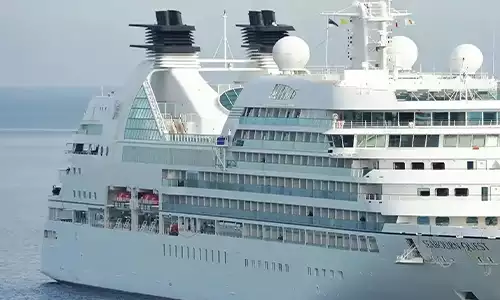
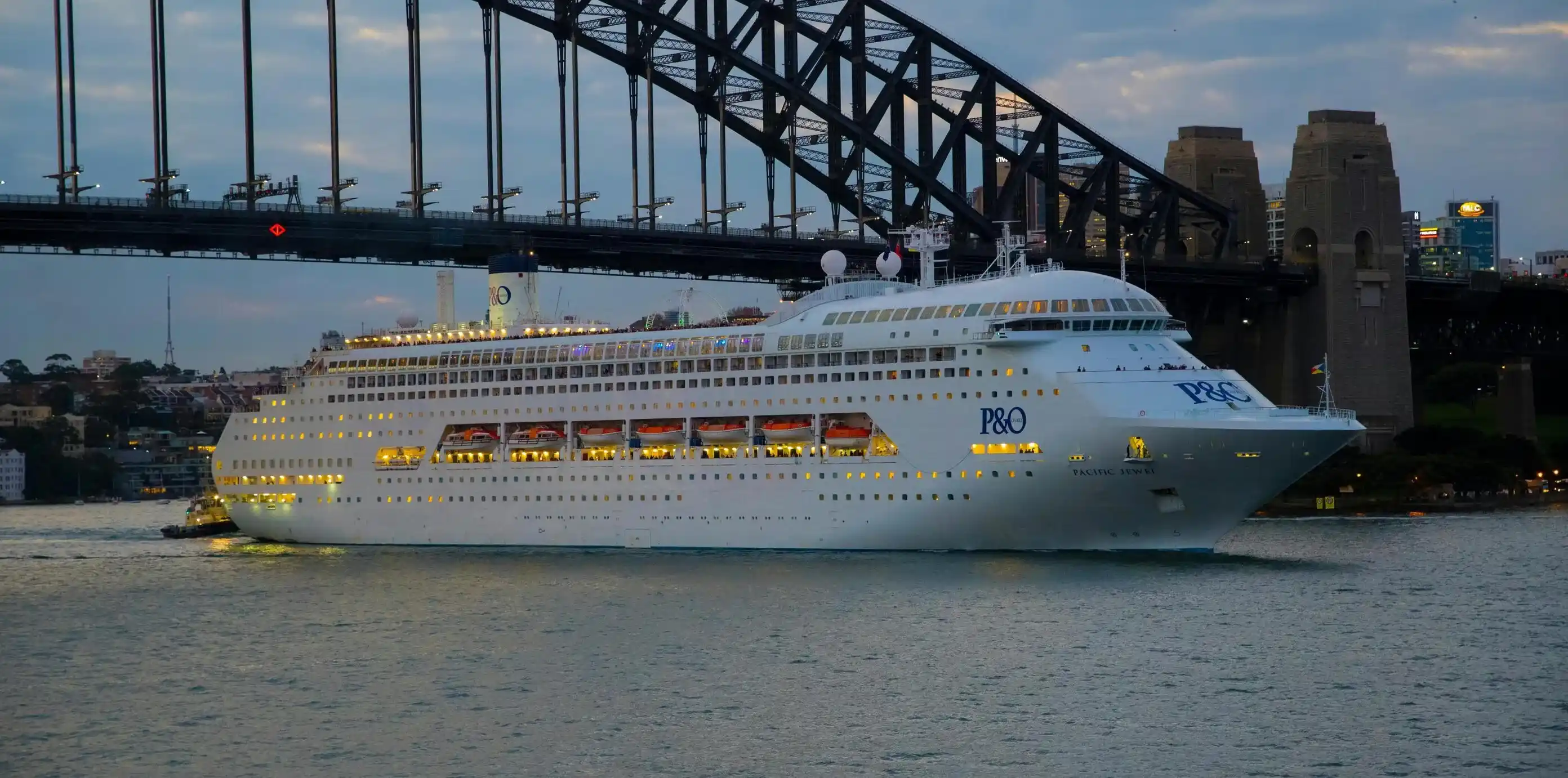
Passenger ships are vessels designed for carrying passengers, including ferries, cruise ships, high-speed passenger crafts, and other types. Due to their high requirements for comfort, speed, and maneuverability, the design of propeller for passenger ships requires special attention to propulsion efficiency, vibration and noise control, and reliability. A well-designed propeller design can not only improve fuel economy but also reduce hull vibration and enhance passenger experience. This paper will systematically introduce the design concepts, key parameter selection, and ship-engine-propeller matching methods for passenger ship propellers.
2. Key Parameters in Passenger Ship Propeller Design
2.1 Diameter(D)
Propeller diameter is a key parameter affecting propulsion efficiency. A larger diameter can improve efficiency but is constrained by the stern profile and draft. The diameter of passenger ship propellers is typically determined based on the following factors:
Vessel speed: High-speed passenger ships (e.g., cruise ships) require a larger diameter to improve propulsion efficiency.
Stern shape: A reasonable clearance between the propeller and the hull (usually ≥0.2D) must be maintained to avoid vibration.
Draft limitation: For passenger ships with shallow draft, the diameter should be appropriately reduced to prevent cavitation.
2.2 Blade Area Ratio(BAR)
The blade area ratio (the ratio of the total blade area to the propeller – disk area) affects the thrust and cavitation performance of the propeller. A blade area ratio ranging from 0.5 to 0.8 is usually adopted for passenger ships:
High-speed passenger ships (e.g., cruise ships): A relatively low BAR (ranging from 0.5 to 0.65) is adopted to reduce resistance.
Low-speed passenger ships (e.g., ferries): A relatively high BAR (ranging from 0.7 to 0.8) is adopted to enhance thrust.
2.3 Material Selection
Passenger ship propellers are required to be corrosion-resistant, cavitation-resistant and high-strength. Common materials include:
Nickel-Aluminum Bronze (NAB): It boasts excellent corrosion resistance and is suitable for most passenger ships.
Composite materials (e.g., Carbon Fiber Reinforced Plastics, CFRP): They are used for weight reduction and noise reduction, but come with a relatively high cost.
2.4 Hub Ratio (d/D)
The hub diameter ratio (the ratio of the hub diameter to the propeller diameter), which typically ranges from 0.18 to 0.25, affects the strength and flow efficiency of the propeller. A relatively small hub diameter ratio (ranging from 0.18 to 0.20) is usually adopted for passenger ship propellers to reduce resistance.
2.5 Rake Angle
The rake angle (the angle at which the propeller blades tilt backward) can improve the cavitation performance of the propeller. Passenger ship propellers usually adopt a rake angle ranging from 10 degrees to 25 degrees to reduce vibration and cavitation noise.
2.6 Blade Profile
The blade profile design of passenger ship propellers must balance efficiency and cavitation suppression:
NACA airfoils: Suitable for high-speed passenger ships to reduce resistance.
Wide Blade Tip Design: Lowers the risk of tip cavitation.
Skewed Blades: Reduce vibration and enhance passenger comfort.
2.7 Number of Blades
Passenger ship propellers usually adopt 4 to 6 blades to balance efficiency and vibration:
4 -blade:Suitable for high-speed passenger ships, featuring high efficiency but slightly greater vibration
5 -blade:Balance efficiency and vibration, commonly used on cruise ships
6 -blade:Suitable for luxury cruise ships with low-noise requirements.
2.8 Skew Angle
The skew angle (the bending angle of the propeller blades along the direction of rotation) can reduce cavitation and vibration. Passenger ship propellers usually adopt a skew angle ranging from 20° to 50° to reduce pulsating pressure.
3.Ship-Engine-Propeller Matching
The propulsion system of a passenger ship must ensure the coordinated operation of the main engine, gearbox, and propeller. Key considerations include:
3.1 Main Engine Power Matching
- The propeller must operate within the optimal speed range of the main engine.
- Excessive power may lead to cavitation, while insufficient power can affect the ship’s speed.
3.2 Speed Optimization
- Low-speed, large-diameter propellers (e.g., those used on cruise ships) offer higher efficiency
- High-speed passenger ships employ high-speed, small-diameter propellers.
3.3 Cavitation and Vibration Control
- Optimize propeller blade profiles and skew angles to reduce cavitation.
- Adopt flexible mounting or vibration damping devices to reduce ship hull vibration.
4.Design Process for Passenger Ship Propellers
- Requirement Analysis:Determine parameters such as speed, passenger capacity, and draft.
- Preliminary Design: Calculate propeller diameter, blade count, disk area ratio, etc
- CFD Simulation: Optimize blade profiles and hydrodynamic performance.
- Cavitation Testing: Conduct cavitation tests in a towing tank.
- Vibration Analysis: Ensure the propeller does not induce hull resonance.
- Manufacturing and Installation: Adopt precision casting or CNC machining techniques.
5.Conclusion
The design of passenger ship propellers requires a comprehensive consideration of efficiency, vibration, noise, and reliability. By rationally selecting parameters such as diameter, disk area ratio, blade number, and skew angle, and optimizing through ship-engine-propeller matching, the performance of passenger ships can be significantly enhanced. In the future, with advancements in CFD technology and new materials, passenger ship propellers are expected to evolve toward higher efficiency and lower noise.


