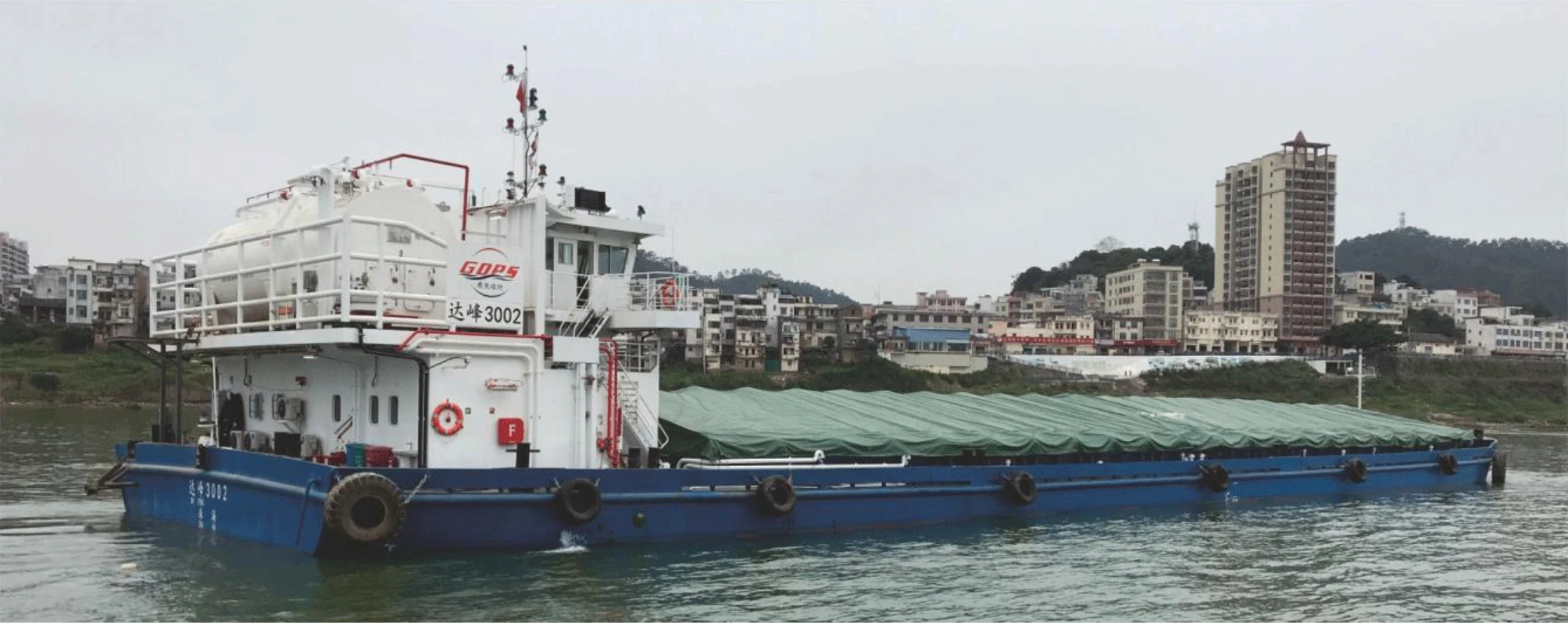
The design of bulk carrier propellers requires comprehensive consideration of the vessel’s economy, durability, and seaworthiness. This paper details the key design parameters of bulk carrier propellers (diameter, disk area ratio, material, hub-to-diameter ratio, rake angle, blade profile, number of blades, skew angle, etc.) and their coordinated matching methods, while also analyzing the principles of ship-engine-propeller matching. Additionally, the paper elaborates on the design process, optimization methods, and common issues in bulk carrier propeller design, providing a reference for the design of bulk carrier propulsion systems.
1.Introduction

Bulk carriers are mainly used for transporting large quantities of bulk cargo such as coal, ore, and grain, featuring large deadweight, moderate speed, and high requirements for operational economy. Due to the significant draft difference between fully loaded and ballasted conditions of bulk carriers, propeller design must balance efficiency across different operating scenarios. A well-designed propeller design can not only improve fuel economy but also extend service life and reduce maintenance costs. This paper systematically introduces the design concept, key parameter selection, and hull-engine-propeller matching method for bulk carrier propellers.
2.Key Parameters for Bulk Carrier Propeller Design
2.1 Diameter(D)
The propeller diameter is a key parameter affecting propulsion efficiency. Bulk carriers usually adopt a larger diameter to improve efficiency, but the stern line shape and draft limitations must be taken into account:
- Full load condition: The draft is relatively deep, and the propeller is fully submerged. The diameter can be appropriately increased (usually 5–8 meters).
- Ballast condition:The draft is relatively shallow. To prevent the propeller from emerging above the water surface, the diameter should not be too large.
- Stern clearance:The clearance between the propeller and the hull is usually ≥ 0.25D to avoid vibration.
2.2 Blade Area Ratio (BAR)
- The Blade Area Ratio (the ratio of the total blade area to the propeller disk area) affects the thrust and cavitation performance of the propeller. Bulk carriers typically adopt a BAR ranging from 0.55 to 0.75:
- Heavy load condition: A higher BAR (0.7~0.75) is used to enhance thrust.
- Light load condition: A lower BAR (0.55~0.65) is used to reduce resistance.
2.3 Material Selection
- Bulk carrier propellers are required to be corrosion-resistant, wear-resistant and high-strength. Common materials include:
- Nickel Aluminum Bronze(NAB):It has excellent corrosion resistance and is suitable for most bulk carriers.
- Manganese Bronze(Mn-Bronze):It is relatively low-cost and applicable to small and medium-sized bulk carriers.
- Stainless Steel (e.g., Duplex Stainless Steel, DSS):It is suitable for bulk carriers operating under high-load conditions or in ice zones.
2.4 Hub Ratio ( d/D)
The Hub Ratio refers to the ratio of the hub diameter to the propeller diameter (usually ranging from 0.18 to 0.22), which affects the strength and flow efficiency of the propeller. Bulk carrier propellers generally adopt a relatively small hub ratio (0.18 – 0.20) to reduce resistance.
2.5 Rake Angle
The rake angle (the angle at which the propeller blades incline backwards) can improve the cavitation performance of the propeller. Bulk carrier propellers usually adopt a rake angle ranging from 5° to 15° to reduce vibration and cavitation risks.
2.6 Blade Profile
The blade profile design of bulk carrier propellers must balance efficiency and durability:
- Wide Blade Root Design:It enhances structural strength and is suitable for heavy-load operating conditions.
- MAU or Type B Blade Profile:It features high efficiency and is applicable for economic sailing speeds.
- Moderate Skew:It reduces vibration and improves sailing comfort.
2.7 Number of Blades
Bulk carrier propellers usually adopt 4 to 5 blades to balance propulsion efficiency and vibration:
- 4-blade propeller:It features relatively high efficiency and is suitable for small and medium-sized bulk carriers.
- 5-blade propeller: It generates less vibration and is applicable for large bulk carriers or ships with strict requirements on vibration control.
2.8 Skew Angle
The skew angle (the bending angle of the propeller blade along the direction of rotation) can reduce cavitation and vibration. Bulk carrier propellers usually adopt a skew angle of 15°~30° to reduce pulsating pressure.
3.Ship-Engine-Propeller Matching
The propulsion system of a bulk carrier must ensure the coordinated operation of the main engine, gearbox, and propeller. Key considerations include:
3.1 Main Engine Power Matching
- The propeller shall operate within the optimal speed range of the main engine (usually 70~100 RPM).
- Excessive power may induce cavitation, while insufficient power will impair operational economy.
3.2 Speed Optimization
- Low-speed and large-diameter propellers (e.g., for Capesize bulk carriers) offer higher efficiency.
- Medium-speed propellers are suitable for small and medium-sized bulk carriers.
3.3 Load Adaptability
- The propeller design must balance full-load and ballast conditions to avoid excessively low efficiency under light-load operations.
- Controllable Pitch Propellers (CPP) are applicable for bulk carriers with significant operating condition variations.
4. Design Process of Bulk Carrier Propellers
- Requirement Analysis: Determine parameters such as deadweight capacity, sailing speed, and draft.
- Preliminary Design: Calculate key parameters including propeller diameter, number of blades, and blade area ratio (BAR).
- CFD Simulation: Optimize the blade profile and hydrodynamic performance.
- Cavitation Testing: Conduct cavitation tests in a towing tank.
- Vibration Analysis: Ensure the propeller does not cause hull resonance.
- Manufacturing & Installation: Adopt precision casting or CNC machining.
5.Conclusion
The design of bulk carrier propellers requires a comprehensive consideration of efficiency, durability, and economy. By reasonably selecting key parameters such as diameter, blade area ratio (BAR), number of blades, and skew angle, combined with the optimization of ship-engine-propeller matching, the performance of bulk carriers can be significantly improved. In the future, with the application of energy-saving technologies and new materials, bulk carrier propellers will develop towards higher efficiency and longer service life.