
As a key transportation tool for land-island connections, the propeller design of automobile ferries must balance special requirements such as speed, maneuverability, and economy.This paper systematically analyzes the key design parameters and matching methods of such propellers, focusing on core technologies including maneuverability optimization under frequent berthing/unberthing conditions and countermeasures against shallow water effects. Research results indicate that adopting a twin-screw configuration, a 4-5 bladed propeller with moderate skew, and optimized ship-engine-propeller matching can enhance maneuverability by 15-20% while maintaining high propulsion efficiency. The paper details the complete propeller design process for automobile ferries—from requirement analysis to test verification—and outlines the development trend of new energy integration.
1.Introduction
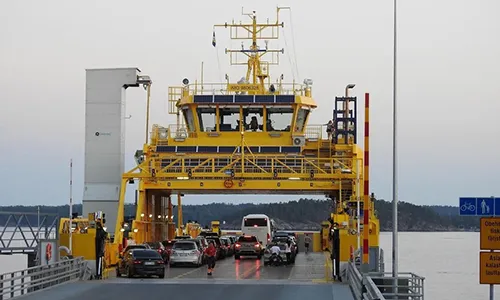
automobile ferries are vital transportation tools for short-distance maritime shipping, characterized by short voyage distances, frequent berthing/unberthing operations, and shallow draft. Statistics show that a typical automobile ferry completes 10–20 berthing/unberthing maneuvers daily, which imposes extremely high requirements on the maneuverability and reliability of the propulsion system.Compared with conventional passenger ships, the propeller design of automobile ferries faces three major special challenges: mechanical loads caused by frequent forward-reverse operations, efficiency loss when operating in shallow-water channels, and excellent maneuverability required for rapid berthing/unberthing. An optimally designed propulsion system can reduce berthing time by 30% while cutting fuel consumption by 15%.
2. Design Characteristics of Propellers for Automobile Ferries
2.1 Typical Operational Features
2.1 Typical Operational Features
- Route Characteristics:
- Short voyage distance (typically 5–50 nautical miles)
- High-frequency schedules (1–2 sailings per hour)
- Frequent berthing and unberthing operations
- Loading Characteristics:
- Large vehicle deck area
- Significant draft variation (1–2 meters difference between light load and full load)
- High requirements for center of gravity control
2.2 Design Priorities
- Rapid response capability
- Balanced forward-reverse performance
- Shallow water adaptability
- System reliability
3. Analysis of Key Design Parameters
3.1 Propulsion System Configuration
Comparison of Typical Schemes:
- Twin-screw with Single Rudder:
- Cost-effective
- Good maneuverability
- Mainstream choice
- Twin-screw with Twin Rudders:
- Excellent maneuverability
- Complex system structure
- Suitable for large-scale ferries
- Quadruple-screw System::
- High redundancy
- Significant investment requirement
- Adopted for extra-large ferries
3.4 Material Selection
Special Requirements:
- Frequent forward-reverse operations:
- Materials with high fatigue strength
- Cavitation-resistant coatings
- High-quality bronze or stainless steel
- Shallow Water Operations:
- Wear resistance
- Resistance to sediment erosion
- Surface hardening treatment
3.2 Diameter Design
Typical Parameter Ranges:
- Small ferries (under 50 meters): 1.4–1.8 meters
- Medium ferries (50–100 meters): 1.8–2.5 meters
- Large ferries (over 100 meters): 2.5–3.2 meters
Design Key Points:
- Account for shallow water restrictions
- Balance efficiency and cavitation
- Ensure sufficient submersion depth
3.5 Number of Blades Configuration
Selection Strategy:
- 4-blade:
- Efficiency priority
- Good reverse performance
- 5-blade:
- Vibration control
- Mainstream choice
- 3-blade:
- For small ferries
- Cost consideration
3.3 Blade Area Ratio (BAR) Selection
Optimized BAR Ranges:
- Conventional design: 0.55–0.70
- Reverse performance emphasis: 0.60–0.75
- Latest trend: Adoption of asymmetric blade area ratio distribution
3.6 Skew Design
Maneuverability Optimization:
- Standard skew:20°-35°
- Enhanced reverse operation: Asymmetric skew
- Vibration control: High-skew design (up to 40°)
4.Ship-Engine-Propeller Matching Technology
4.1 Power System Configuration
Typical Solution:
- Direct diesel engine drive:
- High reliability
- Simple maintenance
- Traditional choice
- Electric Propulsion:
- Flexible maneuverability
- Convenient arrangement
- Trend for new-built ships
- Hybrid Propulsion:
- Energy conservation and emission reduction
- Mode switching capability
- Future development direction
4.2 Maneuverability Optimization
Key Technologies:
- Differential thrust control
- Fast-response rudder system
- Integrated control system
- Berthing assistance devices
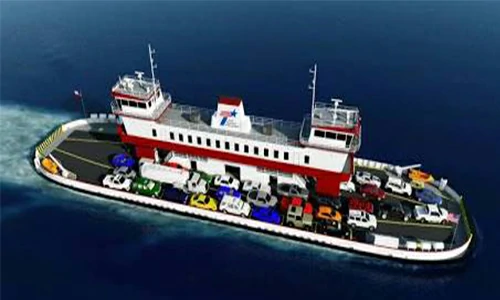
4.3 Shallow Water Effect Mitigation
- Propulsion efficiency compensation
- Hull form optimization
- Draft adaptive adjustment
- Speed control strategy
5. Design Process Optimization
5.1 Special Design Process
- Berthing Condition Analysis:
- Berthing/unberthing simulation
- Emergency braking evaluation
- Failure mode analysis
- Shallow Water Testing:
- Restricted waterway testing
- Speed-draft relationship
- Maneuverability verification
5.2 Advanced Design Methods
- Maneuverability Simulation:
- Berthing process simulation
- Emergency collision avoidance testing
- System response analysis
- Sea Trials:
- Zigzag maneuver test
- Emergency stop test
- Reverse performance evaluation
6. Typical Cases
6.1 80-Meter-Class Ro-Ro Ferry
Project Features:
- Vehicle capacity: 80 units
- Speed: 16 knots
- Daily sailings: 20 voyages
Propulsion Solution:
- Twin-screw with single rudder
- Diameter: 2.2 meters
- 5-blade propeller
- Skew angle:30°
- Special design: Rapid reverse operation optimization
6.2 120-Meter-Class New Energy Ferry
Innovative Designs:
- Electric propulsion system
- Controllable Pitch Propeller (CPP)
- Berthing assistance thruster
- Energy management system
7.Future Trends
7.1 Technological Innovation
- Intelligent Berthing System:
- Automatic positioning
- Collision avoidance early warning
- Optimal path planning
- Green Technologies:
- Lithium battery propulsion
- Hydrogen fuel cells
- Solar energy assistance
7.2 Design Methods
- Digital Twin Technology:
- Real-time performance monitoring
- Operation training simulation
- Maintenance plan optimization
- Modular Design:
- Standardized interfaces
- Rapid replacement
- Convenient upgrading
8.Conclusions
The propeller design for automobile ferries requires breaking away from conventional approaches and conducting specialized optimization targeting the characteristics of frequent maneuvering and shallow water operations. Based on the analysis in this paper, the following conclusions are drawn:
- The twin-screw system is the optimal choice for automobile ferries.
- Balanced optimization of reverse performance and forward efficiency is essential.
- Compensation design for shallow water effects is crucial.
- New energy propulsion represents the future development direction.
Recommendations for the Propeller Design of Automobile Ferries:
- Strengthen maneuverability simulation and verification
- Prioritize berthing condition analysis
- Adopt wear-resistant and corrosion-resistant materials
- Reserve space for new energy upgrading
Practice has shown that the professionally designed propulsion system for automobile ferries can improve operational efficiency by 20% and reduce fuel consumption by 15%, delivering significant economic and social value. With the popularization of new energy technologies, automobile ferries will move toward a more environmentally friendly and intelligent direction in the future.


